

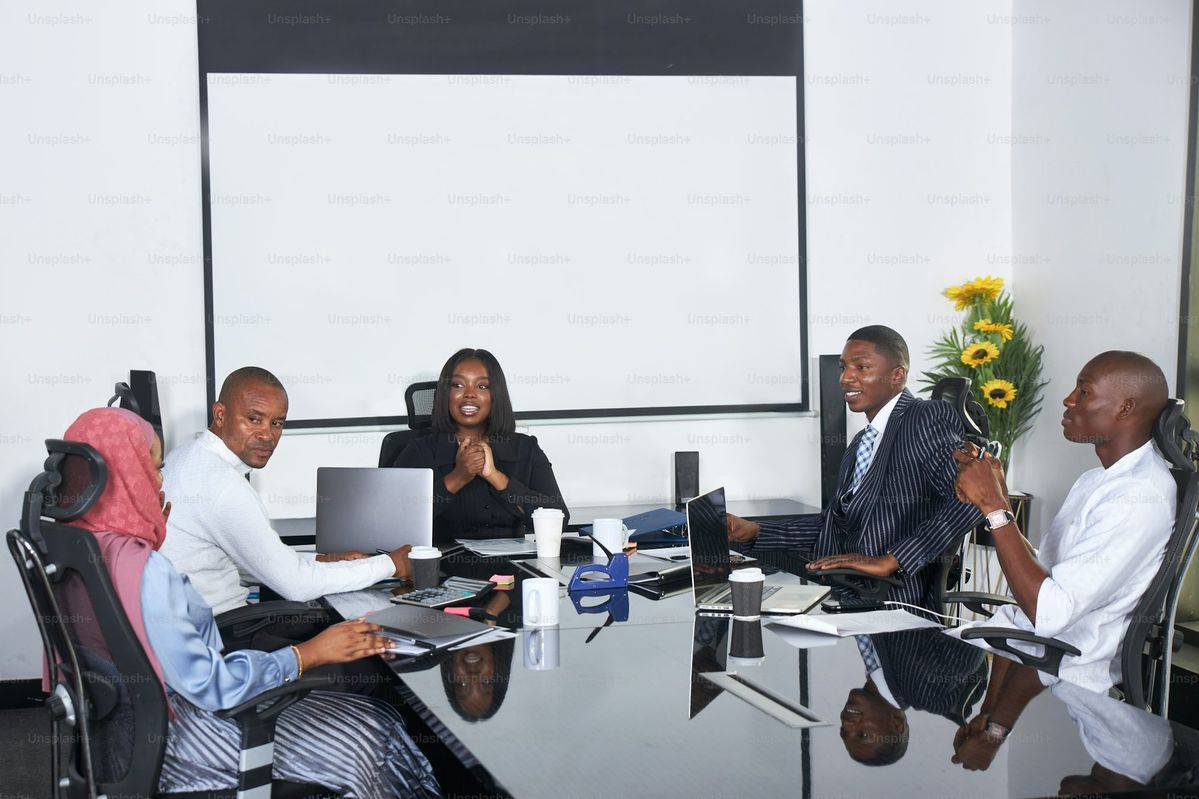
Boards do not fail in crisis; they fail in meetings.
After over twenty-five years sitting in boardrooms as advisor, evaluator, director, secretary and sometimes quiet confidant, one pattern remains constant. The loudest voices are often the least prepared.
And the cost is rarely visible immediately. It shows up later in missed risks, defensive CEOs, passive chairs, frustrated company secretaries, and strategy that drifts.
Usually, this is not a character flaw. It is a governance design issue. Preparation, airtime discipline, and psychological courage are not personality traits. They are board setup choices. When they are weak, ego fills the gap, and when they are strong, clarity prevails.
If you want to know whether your board culture rewards preparation or performance, confidence or competence, control or candour, it may be time for an independent lens.
Request a confidential board evaluation. Sometimes, the most powerful decision a chair can make is to hold up the mirror. The consultant you use to do that matters a lot
“Let us be honest,” the chair said, looking directly at him. “Did you read the risk report?”
The director adjusted his glasses. “I skimmed it.”
This was a regulated financial institution. The capital adequacy note he skipped contained a red flag. Yet he dominated the discussion for twenty minutes, challenging management on issues already addressed in the pack.
The CEO grew defensive. Two directors stopped contributing. The company secretary kept glancing at the clock. We ran out of time before reaching the succession item.
I was there as an external evaluator. I usually request 2-3 meetings to sit in the board as a fly on the wall to observe the board discussion as part of the board evaluation exercise. I love it when I experience the energy or lack of it in the boardroom firsthand. I noticed that the frustration was not about ignorance. It was about noise.
It reminded me of a construction site. The loudest man on the ground keeps shouting instructions, but he has not looked at the blueprint. The engineers stop explaining. The workers improvise. The building still goes up, but the cracks are already inside the walls.
I have noted that unprepared directors speaking the most is a power problem, not a discipline one. Many chairs tolerate airtime based on personality. Many boards confuse confidence with contribution. And when ego fills the room, preparation becomes optional.
High-performing boards do the opposite. They make preparation visible and consequential.
In one bank, I helped the chair introduce a simple rule: every director submits one written insight and one risk question 24 hours before the meeting to demonstrate that they have read the board pack. The submissions are circulated to all. Those who prepare shape the agenda. Those who do not prepare feel the silence.
The tone changed within two meetings. At your next board retreat, run this exercise. Hand out the last board pack. Give each director five minutes to write the single most material risk and the page reference. Then go around the table, no speeches. Just the answer.
You will learn two things quickly.
- Who leads.
- And who performs.
Preparation is not courtesy; it is a fiduciary duty. If the board cannot master that, no strategy, no AI framework, no ESG dashboard will save it.
I remain Mr Strategy. I help future-proof boards to add value.